
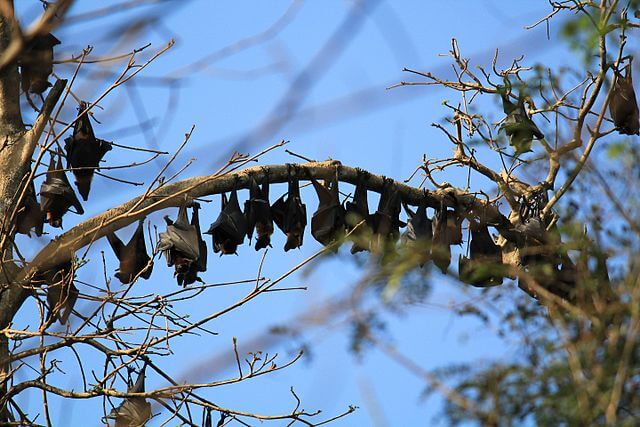
“There are the most extraordinary things we could learn from them,” says Brian Briggs as he inspects yet another bat box that he and his wife, Patty, have installed just outside Heathrow. “They’re completely fascinating, from all kinds of angles.”
A Damp Morning at Bedfont Lakes: Monitoring Local Bat Species
It’s a damp Sunday morning at Bedfont Lakes Country Park, and the Nathusius’ research project team, led by Patty, is checking the artificial roosts to assess the health and numbers of various bat species. Today’s outing, however, feels different; the conversation centres not on the bats themselves but on the government’s new Planning and Infrastructure Bill, which is due for its final reading in the House of Lords the following day.
Fears That the Planning Bill Threatens Protected Wildlife
The group fears the bill will overturn decades of progress in the conservation of protected species. “They’re going to derail all the good conservation work that this country has been notable for,” says Patty, while noting down the bats she has found in the roosting boxes. “We need to look after what’s left.”
Patty Briggs: A Lifetime Devoted to Bat Conservation
Patty, now in her seventies, is a committed conservationist who first developed an interest in bats in 1985, shortly after these species received legal protection in the UK.
“I started doing a lot of research into barn conversions and bats in barns. I remember going into one barn conversion and they were putting a new bathroom wall up. They discovered a bat and had the presence of mind to call someone, and I went there at dusk and discovered a colony of 30 natterer’s bats. If the builder carried on, he would’ve walled them in without knowing.”
Over the years, bats have become an inseparable part of life for the Briggs family.
“When Patty became interested in it, people began bringing injured bats to us,” says Brian, 80. “In my previous existence I had been an anaesthetist. The way people tried to anaesthetise bats in those days was to just put them in the fridge and allow them to go torpid. Which was not kind. So with a local vet and a local wildlife hospital we worked out a way to safely anaesthetise them.”
Whenever possible, they rehabilitate injured bats and release them back into the wild.
A Concerning Decline in Bat Box Occupancy
As they make their way along the line of bat boxes, they find that only five of the 37 are occupied. Patty notes that this is fewer than usual and points out the absence of the area’s typical Nathusius’ pipistrelles.
“The bat boxes are often used as male mating sites,” says Patty. “A male bat will adopt a bat box as his, and anoint the entrance with his scent, then at night he will sing ultrasonically for all the girls who will join him for a party in his box.
“They aren’t disturbed by the planes. They live in an ultrasonic world.”
A “Pro-Growth” Bill That Could Put Nature at Risk
The Planning Bill that has Patty and Brian so concerned has been designed by the Labour government to accelerate housebuilding; ministers say these “pro-growth changes” will help drive their “plan for change”.
However, concerns have mounted throughout the bill’s progress. Environmental groups warn it could allow developers to push through some of the UK’s most valuable wildlife habitats. In June, the Guardian identified 5,000 nature sites potentially at risk under the controversial proposals, and several last-minute amendments in the past week have further heightened fears.
“It’s madness,” says Brian. “How can you possibly tell if there are bats without going and having a look?”
The Controversial Nature Restoration Fund: “Pay to Destroy”
Under the new law, developers would be permitted to build on protected sites by instead contributing to a nature restoration fund, intended to deliver environmental improvements elsewhere at a later date.
“It’s a pay-to-destroy system,” says Patty. “Developers will put money into a fund to pay for compensation, but it may be nowhere near an important colony which needs help.”
“If a colony loses the ability to meet up – maybe their wood has been cut down for a building scheme – the colony is fragmented into two groups. Then that small group is not able to generate the heat they need for the babies to grow and develop.”
——————————————————————————
At Natural World Fund, we are passionate about restoring habitats in the UK to halt the decline in our wildlife.