
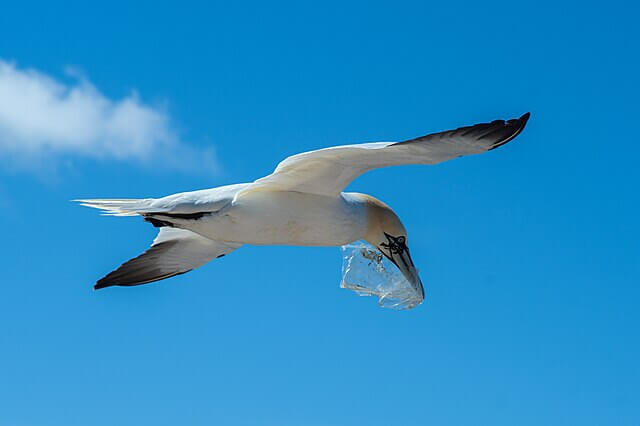
Scientists have examined 10,000 autopsies of marine animals to understand the lethal impact of plastic ingestion.
The findings show that even small amounts of plastic can be deadly, with some species reaching critical risk far sooner than expected.
Just 23 Plastic Items Can Kill a Seabird
The study found that seabirds face a 90% chance of dying after swallowing only 23 pieces of plastic. Marine mammals reach the same danger level at 29 pieces, while sea turtles require around 405 pieces to hit an equivalent threshold.
Researchers said they were shocked by how little plastic is needed to cause fatal harm. For example, less than the volume of a football-sized clump of soft plastic can kill a dolphin, and a seabird may die after ingesting just a few rubber fragments no bigger than peas.
“It’s a really important reminder that plastic pollution does pose an existential threat to ocean wildlife,” said lead researcher, Dr Erin Murphy of the US-based environment group, Ocean Conservancy.
Plastics Found in Thousands of Marine Animals
The analysis used global autopsy records from seabirds, sea turtles, and marine mammals such as dolphins, seals, and sea lions.
The data revealed that:
-
Nearly half of sea turtles had plastic in their stomachs
-
One-third of seabirds had ingested plastic
-
One in ten marine mammals were affected
The researchers calculated death risks for different types of plastic across species groups.
Different Plastics Pose Different Threats
The type of plastic swallowed plays a major role in determining the risk:
-
Seabirds: rubber is the most dangerous
-
Marine mammals: soft plastics and discarded fishing gear pose the highest risk
-
Sea turtles: both hard and soft plastics are harmful
The study only examined plastics found inside animals’ stomachs, meaning it did not account for chemical toxicity or entanglement, so the true level of harm is likely far greater.
A Global Wildlife Crisis Driven by Plastic Pollution
Hundreds of marine species worldwide have been documented with plastic in their bodies. Birds frequently ingest small plastic fragments, while sea turtles often mistake plastic bags for jellyfish.
Until now, scientists lacked precise data on how much plastic ingestion is lethal for different animals. The new research provides crucial insight that could guide global conservation and plastic-reduction strategies.
Dr Murphy added: “To effectively address plastic pollution, the science is clear. We need to reduce the amount of plastic we produce, improve collection and recycling, and clean up what’s already out there.”
The findings are published in the journal Proceedings of the National Academy of Sciences.
——————————————————————————
At Natural World Fund, we are passionate about restoring habitats in the UK to halt the decline in our wildlife.