
Vital Soil Species Largely Overlooked in Northern Ireland
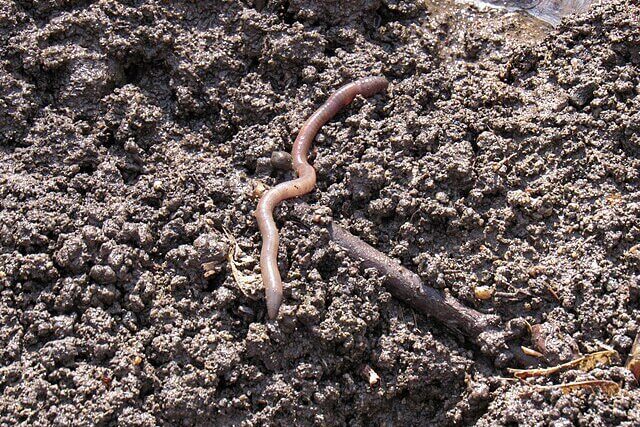
Earthworms, often described as the “farmer’s friend”, play a crucial role in maintaining healthy soils. Yet despite their importance, detailed information on earthworm populations in Northern Ireland remains limited.
A group of scientists is now working to close this knowledge gap by collecting fresh samples for analysis and training members of the public to contribute valuable records. The initiative is led by the Centre for Environmental Data and Recording (CEDaR), which collaborates with National Museums NI to monitor local wildlife and the habitats they rely on.
As part of CEDaR’s 30th anniversary activities, the focus has turned to earthworms. Recent sample collections from Colin Glen in Belfast are expected to shed new light on the health and distribution of these essential soil organisms across Northern Ireland.
Earthworms Added to Northern Ireland’s Priority Species List
Earthworms have recently been placed on Northern Ireland’s priority species list, highlighting their need for targeted conservation action.
Niamh Carmichael of CEDaR emphasised that earthworms represent “a really important group” for wider ecosystem health.
“They’re brilliant decomposers, they’re also food for a number of other species.
“They’re basically the foundation for most of our ecosystems.
“And if we don’t protect those wee guys then we’re gonna lose everything else.”
According to Keiron Brown, senior naturalist at the Biological Recording Company and volunteer with the Earthworm Society of Great Britain and Northern Ireland, earthworm data is scarce across the UK—yet Northern Ireland has the least information of all.
“What we don’t know about earthworms in Northern Ireland includes exactly what species we’ve got.
“In addition to that, we don’t know how many we’ve got and we don’t know how well distributed different species are.”
The lack of records, he noted, leaves researchers with more questions than answers.
“Have we got species of earthworm that are restricted to certain parts of Northern Ireland? Are most of the species spread everywhere?
“And that means we can’t even begin to think about things like conserving earthworms or managing sites and habitats for earthworms if we don’t have that information.”
Climate Change, Habitat Loss and Invasive Species Threaten Earthworms
Similar to much of the UK’s biodiversity, earthworms face pressures linked to climate change, habitat degradation and changes in land use. Another significant threat comes from the invasive New Zealand flatworm, first recorded in Northern Ireland in 1963.
“Lots of things eat earthworms, but this is the only predator that can follow an earthworm down its burrow,” said Keiron.
“So theoretically these could really impact our earthworm populations.”
With limited monitoring of the flatworm, Brown urged anyone who suspects they have found one to photograph it and upload the record to the national monitoring site to assist scientists.
Ordinary members of the public are becoming increasingly important in building robust, reliable biodiversity datasets. Helen James, Senior Curator of Natural History at National Museums NI, is dedicated to ensuring that earthworm samples collected for the Ulster Museum support a wide range of scientific studies.
Adult specimens are used to train volunteers and researchers in species identification before being added to the museum’s permanent reference collections.
“We can also use them to look at DNA studies so to see if the species that we’re finding here are the same as the ones that occur in mainland Britain for example,” she said.
“It’s just a really important part of understanding our ecosystem of Northern Ireland.”
Earthworms Deliver Millions in Environmental Benefits
Earthworms contribute multiple ecosystem services that ultimately benefit farming, food production and natural habitats. Research by the Agri-Food and Biosciences Institute estimates that their contribution to soil health and grass growth is worth around £83 million annually.
As Keiron Brown stressed, their value extends far beyond supporting farmers and gardeners—they are fundamental to the functioning of healthy ecosystems.
“It’s not just about breaking down the soil, which we all know.
“With their burrowing they create aeration into the soil, they allow for drainage, they fix nutrients into forms that are available for plants to take up.
“And they’re actually a really important food source for many, many animals – badgers, hedgehogs, all the garden birds, as well as many other invertebrates.”
——————————————————————————
At Natural World Fund, we are passionate about restoring habitats in the UK to halt the decline in our wildlife.