
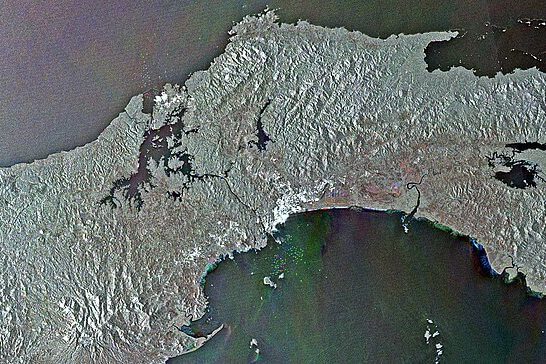
First Recorded Failure of Panama’s Annual Upwelling
Panama’s crucial seasonal upwelling system collapsed in 2025, marking the first recorded failure of this long-standing ocean process. Scientists from the Smithsonian Tropical Research Institute (STRI) have linked the disruption to significantly weakened trade winds, raising concerns for fisheries, marine ecosystems and regional climate stability.
What Is Upwelling and Why It Matters
During Central America’s dry season (typically December to April), strong northern trade winds trigger upwelling in the Gulf of Panama. Cold, nutrient-rich water rises from the deep ocean to the surface, fuelling highly productive fisheries, cooling coastal waters and helping coral reefs withstand heat stress. The influx of cooler water also moderates temperatures along Panama’s Pacific coast during the popular “summer” holiday period.
STRI has monitored Panama’s upwelling cycle for over 40 years, consistently observing it between January and April each year. But in 2025 the process simply did not occur. Expected seasonal drops in sea temperature and boosts in ocean productivity were dramatically reduced, signalling a major disruption to a system long considered stable.
Climate-Driven Weakening of Trade Winds Identified as Key Cause
In a study published in PNAS, STRI researchers identified an abrupt weakening of wind patterns as the most likely cause of the collapse. The findings highlight how climate variability can directly interrupt oceanic mechanisms that coastal communities have relied upon for millennia. Further research is needed to understand the underlying drivers and to evaluate the long-term consequences for fisheries and marine biodiversity.
The event exposes the increasing fragility of tropical upwelling regions—ecosystems that are critically important yet remain poorly monitored. Scientists warn that the collapse underscores the urgent need to strengthen observational networks and climate-ocean forecasting in tropical regions.
The discovery represents one of the first major scientific outcomes from collabortion betweent the S/Y Eugen Seibold research vessel from the Max Planck Institute and STRI, marking a significant step forward in understanding climate-sensitive ocean processes.
——————————————————————————
At Natural World Fund, we are passionate about restoring habitats in the UK to halt the decline in our wildlife.