
The number of salmon migrating upstream to spawn in rivers across the North West has fallen significantly, a decline described as “disappointing” by the Ribble Rivers Trust.
The Clitheroe-based environmental charity said salmon numbers have dropped by around 60% since 2012, falling from approximately 1,000 fish to just 400. Climate change is believed to be a key factor behind the decline.
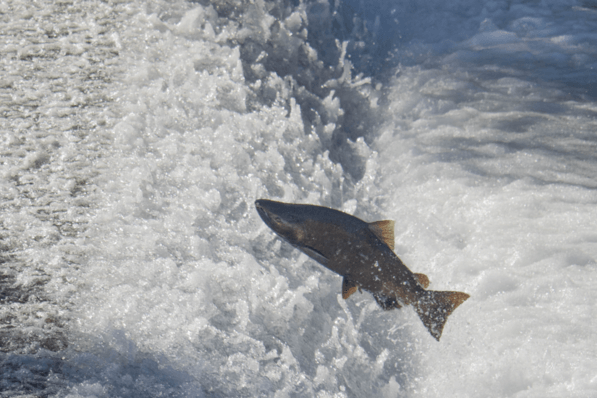
The warning comes as large crowds gathered at Stainforth Force, an 8ft (2.5m) waterfall, to watch salmon returning from the sea attempt to leap upstream as part of their annual migration.
Mr Spees said: “The decline is ongoing, so we’ve been working really hard as a trust to address all the issues and get that decline reversed.”
“As human beings we’ve been degrading our rivers for a few hundred years so it’s going to take time to us a while to get them back to their prime condition.
“But we’re hoping in the next five to 10 years we’ll really start to see that decline bottoming out and starting to increase again.”
Mr Spees, who joined the Ribble Rivers Trust as a fisheries scientist in 2008, said he remains inspired by the resilience of salmon.
“This is incredible, they’ve swum over 3,000 miles at sea.
“They’ve now reached this natural waterfall and they’re desperately trying to get to the really good spawning habitat, where there’s lovely clean gravel where they can dig their nests.”
After leaving the estuary, salmon swim along the coastline into the North Sea and travel as far as Greenland in search of richer food sources. They later rely on their sense of smell and the Earth’s gravitational field to navigate back to the rivers where they were originally spawned.
Multiple Threats Facing Migrating Salmon
During their journey, salmon face a range of threats, including predators such as birds and otters, as well as anglers.
Jack Spees said: “They’ll get battered and scraped, they might pick up infections. By the time they get here they’ve really gone through the mill and they’ve still got this incredible obstacle to overcome.”
Charlotte Ireland Pope from the Ribble Rivers Trust said: “Since 2012 numbers have declined quite steadily and quite rapidly.
“We think it’s likely that climate change is a major contributing factor, as severe flooding and summer droughts have also increased significantly over the same period.
Once they enter freshwater, salmon stop eating to conserve energy and ensure food remains available for their young. They then take on the physically demanding journey upstream to reach their spawning grounds.
The Ribble Rivers Trust said changes in sea conditions could be disrupting the salmon life cycle. Cold water helps protect salmon from infection and regulates their metabolism, but rising sea temperatures are reducing these benefits.
Increased flooding also poses a major risk, as strong river flows can wash away salmon nests, known as redds.
Conservation Efforts to Protect Salmon Habitat
To support salmon populations, the Ribble Rivers Trust is working to restore and protect river habitats by planting woodland to help reduce flooding.
Other conservation measures include removing man-made barriers such as weirs and installing fish passes, which allow salmon to swim upstream more easily. The Trust is also working with farmers to reduce nutrient runoff into rivers, improving water quality for salmon and other wildlife.
——————————————————————————
At Natural World Fund, we are passionate about restoring habitats in the UK to halt the decline in our wildlife.