
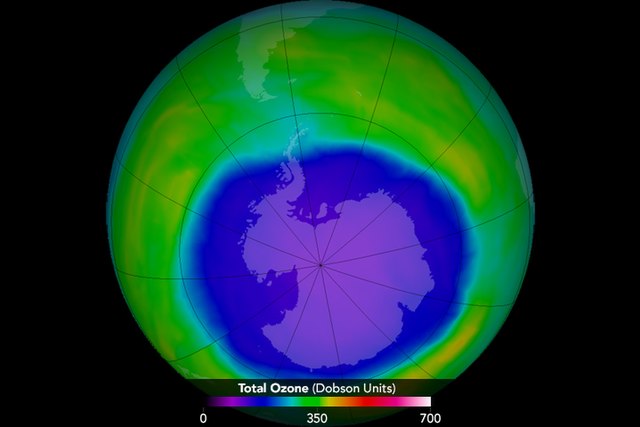
The hole in the ozone layer over Antarctica this year was the smallest and shortest-lived since 2019, according to European space scientists, who said the findings offer a “reassuring sign” that the ozone layer is continuing to recover.
Data from the Copernicus Atmosphere Monitoring Service (CAMS) shows the annual ozone hole reached a maximum area of about 21 million square kilometres over the southern hemisphere in September.
This was significantly smaller than the 26 million square kilometres recorded at its peak in 2023. The ozone hole then shrank steadily before closing earlier than usual on Monday.
Second Year in a Row of Reduced Ozone Depletion
The findings mark the second consecutive year in which the Antarctic ozone hole has been smaller than average, following a series of unusually large and long-lasting holes between 2020 and 2023.
“The earlier closure and relatively small size of this year’s ozone hole is a reassuring sign,” said Laurence Rouil, the director of Cams. “[It] reflects the steady year-on-year progress we are now observing in the recovery of the ozone layer thanks to the ODS [ozone-depleting substances] ban.”
Scientists view the recent trend as a positive indicator after several years of concern over persistent ozone depletion.
The ozone layer, often described as the planet’s natural sunscreen, shields life on Earth from harmful ultraviolet (UV) radiation but was severely depleted by human-made chemicals.
Since ozone-depleting substances were phased out under the 1987 Montreal Protocol and subsequent amendments, scientists say the layer has been on a gradual path to recovery.
Studies Show Pollution Controls Prevented Severe Damage
A study published in Nature Climate Change last year found the international agreements successfully reduced emissions, causing the warming effects of ozone-depleting gases to peak five years earlier than expected.
The World Meteorological Organization estimates that the ozone layer over Antarctica, where depletion is most severe, could return to 1980 levels by around 2066.
Researchers are still examining why the ozone holes between 2020 and 2023 were unusually large and persistent.
One leading theory is the 2022 eruption of the Hunga Tonga volcano, which released vast amounts of ash and water vapour into the stratosphere, potentially contributing to the size of the 2023 ozone hole.
CAMS said the large ozone holes seen in recent years show that global stratospheric ozone could have fallen to “catastrophic levels” without successful international action to phase out harmful pollutants.
“This progress should be celebrated as a timely reminder of what can be achieved when the international community works together to address global environmental challenges,” said Rouil.
Why the Ozone Layer Matters for Human Health
A thinning ozone layer allows more UV radiation to reach the Earth’s surface, increasing the risk of skin cancer, cataracts and crop damage, and posing wider threats to human health and ecosystems.
Last week, Nasa and the US National Oceanic and Atmospheric Administration ranked the 2025 Antarctic ozone hole as the fifth smallest recorded since 1992.
Paul Newman, chief scientist of Nasa’s ozone research team at the Goddard Space Flight Center, said the observed changes are consistent with long-term scientific predictions.
“They’re forming later in the season and breaking up earlier,” he said. “But we still have a long way to go before it recovers to 1980s levels.”
——————————————————————————
At Natural World Fund, we are passionate about restoring habitats in the UK to halt the decline in our wildlife.