
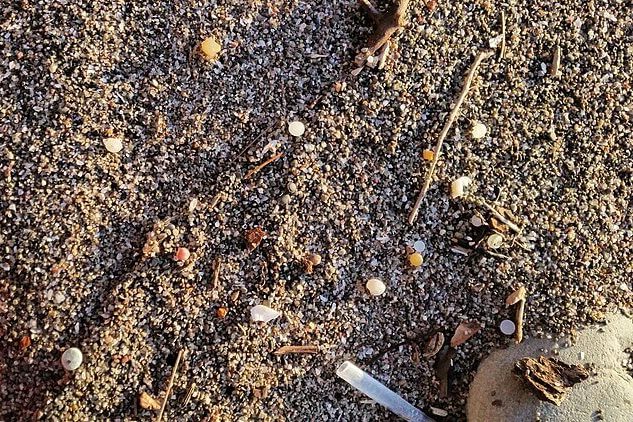
Plastic nurdles have been discovered in 84% of surveyed protected nature sites across the UK, raising serious concerns about plastic pollution in some of the country’s most important wildlife habitats.
Nurdles are tiny plastic pellets used by the plastics industry as the raw material for manufacturing larger plastic products. Despite their small size, they pose a major environmental threat when spilled into nature.
Widespread Pollution in Sites of Special Scientific Interest (SSSIs)
Nurdles were found in 168 out of 195 Sites of Special Scientific Interest (SSSIs). These sites are legally protected due to the rare species and habitats they support, and are meant to be safeguarded from pollution and environmental damage.
The environmental charity Fidra has been running nurdle hunts at SSSIs across the UK since 2013. Its research shows that plastic pellets are present in more than four out of five protected sites, highlighting a long-standing and systemic pollution issue.
Nurdles Detected in UK National Parks
Plastic nurdles were also discovered in six UK national parks, including:
-
Loch Lomond & the Trossachs
-
North York Moors
-
New Forest
-
Pembrokeshire Coast
-
Eryri (Snowdonia)
-
South Downs
This demonstrates that even the UK’s most iconic landscapes are not immune to plastic pollution.
Nurdles are produced at industrial sites around the UK, including Grangemouth in Scotland, and are transported by land and sea to manufacturing facilities. They are primarily lost due to poor handling and accidental spills throughout the supply chain.
It is estimated that up to 53 billion nurdles may enter the UK environment every year.
Worst-Affected Areas Identified
Some of the most heavily polluted locations include:
-
The River Itchen in Southampton, including Chessel Bay Nature Reserve
-
The Firth of Forth in Scotland
These areas show particularly high concentrations of plastic pellets.
Why Plastic Nurdles Are Harmful
Nurdles are hazardous because they are made of plastic and often contain toxic chemicals. Wildlife can mistake them for food, leading to poisoning or death. Over time, nurdles break down into microplastics, which can enter the human food chain and pose risks to both human health and biodiversity.
Fidra’s senior project officer, Megan Kirton, said: “It is shocking to see nature reserve and protected areas around the UK impacted by plastic pellet pollution. These precious sanctuaries are being contaminated by preventable industrial pollution.’’
Fidra is calling on governments worldwide to coordinate policies on nurdle pollution and introduce legislation that enforces best practice across the plastics supply chain. The charity is also urging the International Maritime Organization to implement robust, mandatory measures to prevent plastic pellet spills during maritime transport.
——————————————————————————
At Natural World Fund, we are passionate about restoring habitats in the UK to halt the decline in our wildlife.