
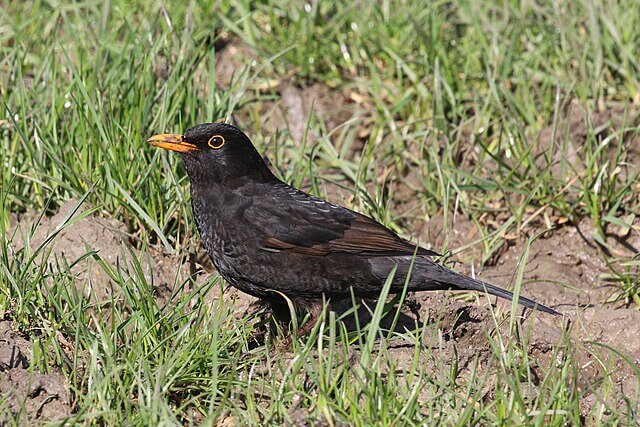
Populations of insect-eating birds in France appear to be making a cautious recovery following a ban on bee-harming pesticides, according to the first study to assess how wildlife is rebounding in Europe after chemical restrictions.
Neonicotinoid Ban Linked to Rising Bird Numbers
Neonicotinoids are the most widely used insecticides in the world, commonly applied in agriculture and in flea treatments for pets. By 2022—four years after the European Union banned neonicotinoids for use in fields—researchers recorded a 2%–3% increase in insectivorous bird populations in France.
Species showing improvement included blackbirds, blackcaps and chaffinches, which rely heavily on insects both as adults and during chick development.
The findings may be reflected across the EU, where the neonicotinoid ban came into force in late 2018. However, comparable studies have not yet been carried out in other member states.
The lead researcher, Thomas Perrot from the Fondation pour la recherche sur la biodiversité in Paris, said: “Even a few percentage [points’] increase is meaningful – it shows the ban made a difference. Our results clearly point to neonicotinoid bans as an effective conservation measure for insectivorous birds.”
Like the EU, the UK banned neonicotinoids for general outdoor use in 2018, though exemptions are still permitted in exceptional circumstances. In contrast, neonicotinoids remain widely used in the United States, which has lost almost 3 billion insectivorous birds since the 1970s.
Large-Scale Study Tracks Bird Populations Over Time
The study, published in the journal Environmental Pollution, analysed data from more than 1,900 sites across France, collected by trained volunteers as part of the French Breeding Bird Survey.
Researchers compared two periods:
-
Pre-ban: 2013–2018
-
Post-ban: 2019–2022
Each monitoring site covered an area of 2km by 2km (1.25 miles).
Pesticides Linked to Lower Bird Numbers
The research team analysed data on 57 bird species and found that insect-eating birds were 12% less abundant at sites where neonicotinoids had been used, compared with areas without exposure to the chemicals.
The study suggests that other insect-dependent animals—such as small mammals, bats and even fish—may also be benefiting from reduced pesticide use. More generalist species, including wood pigeons and house sparrows, appeared less affected, likely because their diets are more flexible and not dependent on insects.
Frans van Alebeek, policy officer for rural areas at BirdLife Netherlands, said: “A lot of pressure was necessary to force governments to make this ban. There was huge pressure on the EU parliament from citizens.
“I was surprised you could already see recovery,” said Alebeek, who was not involved in the research. “It’s extremely difficult to study this – which makes this study so special. The positive message is that it helps to ban pesticides and it will result in the recovery of wildlife.”
Other researchers were more cautious about the findings. James Pearce-Higgins, director of science at the British Trust for Ornithology, said: “It’s a study that shows there may be early signs of weak population recovery but the results are uncertain and could be down to other correlated factors.”
While habitat quality and climate change also play roles in shaping bird populations, researchers caution that it is difficult to isolate individual causes with complete certainty.
“This study highlights the value of long-term monitoring so we can better understand these trends in the future,” Pearce-Higgins said.
Global Decline in Birds Linked to Insect Loss
Bird populations have declined sharply in many regions worldwide, with multiple studies pointing to insect loss as a key driver of these trends—particularly for insectivorous species.
Neonicotinoids are systemic insecticides, meaning they are absorbed by plants and spread throughout their tissues. Any part of the plant becomes toxic to insects that feed on it. Introduced in the 1990s, these chemicals rapidly became widespread across European agriculture.
Large-scale bee die-offs were first reported in France and Germany in the early 2000s. Scientific studies showed that even very low doses of neonicotinoids could disrupt bees’ navigation and feeding behaviour. Public concern grew throughout the 2010s, leading to the EU’s near-total ban on outdoor use in 2018, despite strong opposition from parts of the agribusiness and chemical industries.
“The weak recovery after the ban makes sense,” said Perrot. “Neonicotinoids persist in soils for years and can keep affecting insects.
“Overall, our results suggest that it will take several decades for insectivorous bird populations to recover. But we think that’s normal, because studies on other pesticides like DDT show that most bird populations take 10 to 25 years to fully recover.”
In many developing countries, pesticides continue to be used with fewer restrictions. Their impact on bird populations is believed to be significant but remains poorly documented.
Sustainable Farming Key to Bird Recovery
Birds are highly sensitive to farming practices, including pesticide use and habitat loss. Researchers say more sustainable agriculture, reduced chemical inputs and the restoration of semi-natural habitats would support long-term recovery.
Some EU policies already promote this approach through “green infrastructure” funding, aimed at balancing food production with biodiversity protection.
Alebeek said: “Neonicotinoids are part of a trend in which industry is getting better and better at finding chemicals that are extremely effective at low concentrations – you use less but the toxicity is not going down.
“To me, it shows that our system of testing pesticides before they are allowed on the market is not good enough. We have done it for 50 years for all kinds of pesticides – we go through the same process every 10 years and learn very little from history.”
——————————————————————————
At Natural World Fund, we are passionate about restoring habitats in the UK to halt the decline in our wildlife.