
Native ‘Tredges’ Urged to Help Boost England’s Tree Cover
Gardeners are being encouraged to plant native “tredges” — foliage that sits between the size of a tree and a hedge — to help restore nature and increase England’s tree cover, the Royal Horticultural Society (RHS) has said.
Gardens Could Play Key Role in Nature Recovery
Experts say drawing inspiration from ancient woodlands could significantly boost wildlife across England’s 25 million gardens, while helping to address the country’s low woodland coverage.
England currently has approximately 10% woodland cover. The government has set a target to increase this to at least 16.5% of all land by 2050.
A garden showcasing this approach will be unveiled at the Chelsea Flower Show in May. The Woodland Trust: Forgotten Forests Garden, designed by Ashleigh Aylett, will depict a damaged ancient woodland transitioning from a dark, monoculture conifer forest to a regenerated, thriving ecosystem.
The design will feature ancient woodland “indicator” plants, including wild service tree and red campion, which help identify long-established woodland habitats.
The Woodland Trust estimates that only 7% of the UK’s native woodland is currently in good ecological condition, with severe consequences for the wildlife that depends on it.
While the Chelsea garden represents an ambitious recreation of ancient woodland, conservationists say its principles can be adapted for gardens of all sizes.
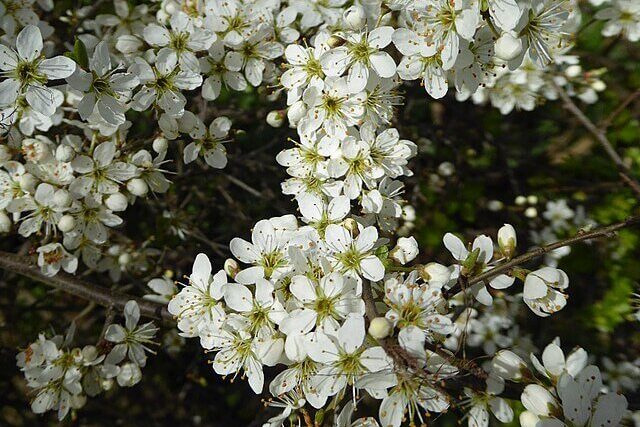
Mark Gush, the RHS’s head of environmental horticulture, said: “Often found in ancient woodlands, a top choice for gardeners seeking a small tree is Crataegus laevigata. It is a great example of a ‘tredge’, which can be both a standalone tree or a hedge.
“It strikes the perfect balance between beauty and functionality. With attractive foliage, flowers and haws, it is also resilient to wet and dry climate extremes, tolerant of clay soils, and there is research evidence to show that this genus is effective at capturing pollutants from busy roads in summer. Its thorny protective canopy supports biodiversity and helps alleviate flooding risks from summer thunder-showers through effective water uptake.”
Small Native Trees Can Have Big Benefits
The Woodland Trust and RHS are encouraging gardeners with limited space to plant small native trees and tredges, rather than avoiding trees altogether.
Native species do not need to grow large to deliver environmental benefits. Smaller trees can provide spring blossom, autumn berries and shelter for wildlife without overwhelming gardens. A mix of tree species also improves soil health, as different root structures enhance soil stability and nutrient cycling.
Aylett’s design also demonstrates “forest planting”, using layered canopies that range from ground cover and herbaceous perennials to shrubs and trees of varying heights.
This approach maximises biodiversity in small spaces and helps gardens withstand climate extremes, offering cooling in hot weather and protection during colder periods.
Transitional Gardening Mimics Natural Woodland Edges
Experts say “transitional gardening” — where different habitats blend into one another with diverse borders — is one of the most effective ways to recreate ancient woodland conditions at home.
Replacing fences or walls with native hedges can also increase habitat availability, allowing even small gardens to support birds, insects and mammals, Gush said.
He added: “Woodland edges support some of the highest levels of biodiversity because they represent an ‘ecotone’ – a transition zone between different environments. Ecotones between two habitats are often richer in species than either. This is a concept that can be applied incredibly successfully to domestic gardens where ecotones abound – lawns to borders, borders to shrubs and trees, pond edges and more. Think softer gradual transition as opposed to hard cutoff.”
The RHS is urging gardeners to choose trees grown under the UKISG (UK and Ireland Sourced and Grown) scheme. These trees are grown from seed within the UK and Ireland, reducing the risk of introducing pests and diseases — one of the biggest threats facing native woodlands.
After the Chelsea Flower Show, the Woodland Trust garden will be relocated to Hawthorn Primary School in Newcastle upon Tyne. The school is in an area with low tree canopy cover, and the move will help increase access to trees in a neighbourhood where green space is limited.
Native “Tredges” That Benefit UK Wildlife
Examples of native or widely beneficial tredges for UK gardens include:
-
Beech (Fagus sylvatica)
-
Holly (Ilex aquifolium)
-
Western red cedar (Thuja plicata)
-
Common yew (Taxus baccata)
-
Hawthorn (Crataegus monogyna)
——————————————————————————
At Natural World Fund, we are passionate about restoring habitats in the UK to halt the decline in our wildlife.