
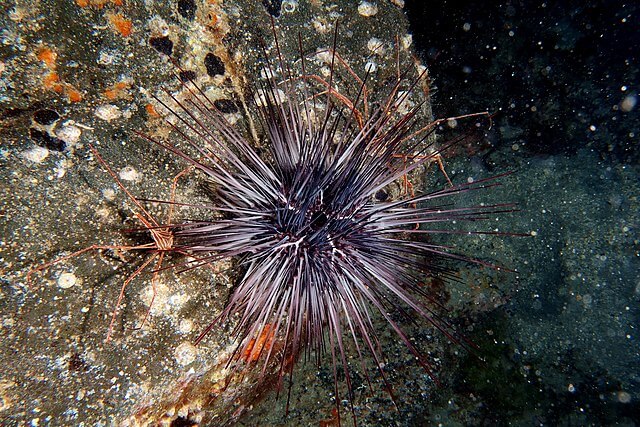
Deadly Sea Urchin Disease Pushes Key Marine Species Towards Extinction
A fast-spreading marine disease is driving some sea urchin species to the brink of extinction and has already wiped out entire populations, scientists have warned in a a study.
Since 2021, Diadema africanum urchins across the Canary Islands have been almost entirely eliminated by an unidentified disease. Researchers recorded a staggering 99.7% population collapse off Tenerife and losses of around 90% in parts of the Madeira archipelago.
The die-off is not confined to the Atlantic. Mass mortality events have also been documented among related sea urchin species in the Red Sea, Mediterranean, Caribbean and western Indian Ocean, prompting fears of a global “marine pandemic”.
ván Cano, a researcher at the University of La Laguna and author of the study, said: “What we have seen since 2021 is really, really concerning. We are talking about the disappearance of several species in a really short time.”
Ecosystem Engineers in Rapid Decline
Sea urchins play a critical role in ocean ecosystems. Closely related to starfish, they are known as “ecosystem engineers” because of their ability to shape marine environments.
By grazing on algae, urchins prevent seaweeds from smothering coral reefs, helping hard corals survive and providing habitat for thousands of other species. Their spines also offer shelter to small marine organisms, while the urchins themselves form an important food source for predators.
Where urchins have vanished, the consequences have been severe. In the Caribbean, previous urchin losses have been linked to a halving of coral cover and an 85% increase in algal growth, transforming vibrant reefs into degraded ecosystems.
“What fascinated me in the first place about this species is that they change their environment. Like humans, when they are present, they modify their habitat,” said Cano. “We don’t know the cascading effect that this could have in other species.”
Human Activity Likely Involved
Scientists have yet to identify the precise cause of the outbreak, but researchers believe human activity is likely playing a role in spreading the disease. Possible transmission routes include global shipping, altered ocean currents and unusual wave activity.
“It’s very unlikely this is happening in isolation,” said lead researcher Cano, who described humans as “probably involved” in distributing the pathogen across oceans.
Cano originally travelled to the Canary Islands to study the early life stages of sea urchins. Instead, he found there were barely any young animals left to study. The collapse was so severe that he changed the focus of his doctoral research to document the species’ rapid decline.
The Diadema genus is among the most widespread and ecologically important groups of sea urchins in tropical waters worldwide. Today, only a handful of isolated locations appear to have escaped the disease so far.
Fears for Reef Futures
With so few unaffected populations remaining, scientists warn the loss of Diadema urchins could have long-lasting impacts on coral reefs already under pressure from climate change, pollution and overfishing.
Researchers are now racing to understand how the disease spreads and whether any management or conservation measures could prevent further extinctions — before one of the ocean’s most important ecosystem engineers disappears altogether.
——————————————————————————
At Natural World Fund, we are passionate about restoring habitats in the UK to halt the decline in our wildlife.