
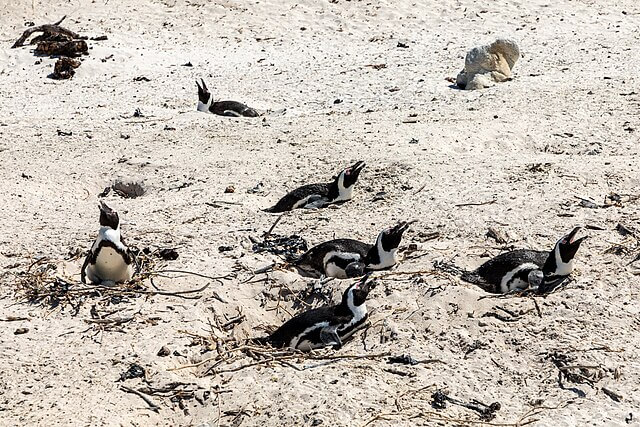
Starving African Penguins Signal a Collapse in Ocean Health
More than 60,000 African penguins have starved to death in colonies off the coast of South Africa after their primary food source, sardines, disappeared from surrounding waters, according to new scientific research.
The findings highlight the devastating impact of climate change and overfishing on one of the world’s most threatened seabirds.
Major Breeding Colonies Almost Wiped Out
The study found that more than 95% of African penguins at two critical breeding sites, Dassen Island and Robben Island, died between 2004 and 2012. These losses were not isolated incidents but part of a wider and ongoing collapse in penguin populations across the region, said the paper.
“These declines are mirrored elsewhere,” said Dr Richard Sherley, from the Centre for Ecology and Conservation at the University of Exeter.
Researchers believe the birds likely starved during their annual moulting period, when they are unable to hunt for food at sea.
Climate Change and Overfishing Driving Food Shortages
African penguins rely heavily on sardines, particularly the species Sardinops sagax. The study found that in almost every year since 2004, sardine biomass off South Africa’s west coast fell to just 25% of its historical maximum.
Rising ocean temperatures and changes in salinity linked to climate change have reduced sardine spawning success. At the same time, fishing pressure on already depleted stocks has remained high, further reducing food availability for wildlife.
Each year, African penguins replace their feathers to maintain insulation and waterproofing. During this moulting period, which lasts around 21 days, they must remain on land and survive without feeding.
To endure this fast, penguins need to build up fat reserves beforehand. When sardines are scarce, many birds simply do not have the energy reserves needed to survive, leading to mass starvation events.
“If food is too hard to find before they moult or immediately afterwards, they will have insufficient reserves to survive the fast,” said Sherley. “We don’t find large rafts of carcasses – our sense is that they probably die at sea,” he said.
A Species on the Brink of Extinction
African penguins have suffered an estimated population decline of nearly 80% over the past 30 years. In 2024, the species was officially listed as critically endangered, with fewer than 10,000 breeding pairs left.
Without urgent intervention, conservationists warn that the species could disappear entirely within decades.
Nature charities and conservation groups are working to prevent further losses. Efforts include installing artificial nests to protect chicks, managing predators at breeding sites, and rescuing and hand-rearing weakened adults and chicks.
Commercial purse-seine fishing has now been banned around South Africa’s six largest penguin breeding colonies. This type of fishing involves encircling entire shoals of fish and can rapidly strip food from the ecosystem.
It is hoped this will “increase access to prey for penguins at critical parts of their life cycle”, said the study co-author Dr Azwianewi Makhado, from the Department of Forestry, Fisheries and the Environment in South Africa.
Urgent Call for Sustainable Fisheries Management
Professor Lorien Pichegru of Nelson Mandela University described the findings as extremely concerning, pointing to decades of mismanagement of small fish stocks in South African waters.
“The results of the study are only based on penguins’ survival until 2011, but the situation has not improved over time,” she said.
She said restoring sardine populations requires urgent action, not only to protect African penguins but also to safeguard other endemic species that depend on the same food sources.
Conservation organisations say the crisis facing African penguins is a warning sign of wider ocean ecosystem collapse and a clear call for stronger protections for marine life.
——————————————————————————
At Natural World Fund, we are passionate about restoring habitats in the UK to halt the decline in our wildlife.