
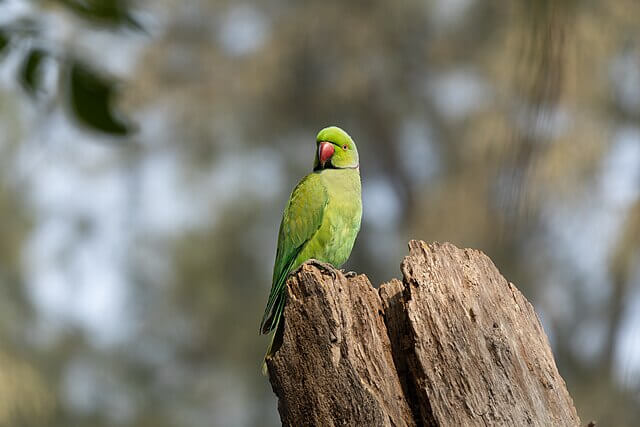
Invasive parakeets raise alarm for native wildlife in Richmond Park
The soundscape of Richmond Park has changed profoundly over the past 20 years. Calls from skylarks, stonechats and woodpeckers have been increasingly drowned out by one species. The ring-necked parakeet, a non-native bird, now dominates the park’s canopy and raises growing concern among conservationists.
For nature charities, the issue is not noise but the potential damage this invasive species may cause to already struggling native wildlife.
Explosive growth of a non-native species
Ring-necked parakeets have increased around 25-fold in the UK between 1994 and 2023. Once largely confined to London and the south-east, the birds are now spreading into northern cities such as Manchester and Newcastle.
The British Trust for Ornithology estimates there are now more than 30,000 parakeets in the UK, including about 15,000 breeding pairs. Climate change has helped boost survival rates, allowing the population to expand rapidly and unchecked.
Richmond Park has become a stronghold for parakeets. Its ancient trees offer deep nesting cavities, while fruit, berries and flowers provide plentiful food.
These same features are vital for native species that rely on tree hollows, including starlings, lesser spotted woodpeckers and bats. Conservationists fear parakeets may be displacing native wildlife from nesting and roosting sites within this protected national nature reserve.
Growing concern for threatened birds and bats
UK research into the impact of ring-necked parakeets remains limited, but their rapid spread is worrying, says Paddy McCleave of the charity Songbird Survival.
“One of the impacts of these birds is the competition they create for our native birds. Their presence, as woodpecker-sized birds, at garden feeders can cause alarm among native birds, subsequently reducing foraging behaviour and potentially increasing stress.”
Native birds that already face habitat loss, pollution and climate pressures may now be competing with an aggressive and adaptable invasive species. Bats, which depend on tree cavities for shelter, may be particularly vulnerable.
Evidence from Europe highlights potential risks
Studies from mainland Europe suggest parakeets can negatively affect native species. In 2010, Belgian scientists found that rising parakeet numbers could place nuthatches at risk through competition for nesting spaces.
In Spain, researchers investigating the 81% decline in numbers of noctule bats in Seville observed parakeets chasing bats from roosts. Dead and injured bats were later found beneath nesting trees, some with wounds consistent with parakeet attacks.
While UK studies have so far produced mixed results, conservationists warn that the absence of evidence should not be mistaken for evidence of safety.
Outdated risk assessments leave wildlife exposed
The UK government’s most recent risk assessment on ring-necked parakeets dates back to 2011, when the population stood at about 5,000 birds. Even then, officials warned of a high potential risk to agriculture and native wildlife.
With numbers now exceeding 30,000, nature charities say failure to update assessments and management plans leaves native species increasingly exposed to harm.
Authorities have so far avoided population control due to concerns about public opposition. However, conservationists warn that delaying action only makes intervention more difficult and expensive.
In Madrid, where parakeet numbers reached 13,000, officials have introduced control measures including trapping and egg sterilisation. Similar debates are now emerging in the UK as populations continue to rise.
Urgent need for research and precautionary action
Dr Amy Leedale, a behavioural ecologist at the University of Salford, says it is too early to draw firm conclusions about long-term impacts in the UK. However, nature groups argue that precautionary action, improved monitoring and updated research are essential.
“To understand adaptation and impacts on native species we do need long-term field data to build a complete picture and understand what is going on,” said Leedale. “It is not something you can understand in just a year of field work.”
Without intervention, the unchecked spread of ring-necked parakeets risks adding yet another pressure to native birds and bats already facing a nature crisis.
——————————————————————————
At Natural World Fund, we are passionate about restoring habitats in the UK to halt the decline in our wildlife.