
Long-Lost Bolivian Killifish Rediscovered After 20 Years
A long-lost Bolivian killifish once thought to be possibly extinct has been rediscovered, revealing a globally significant hotspot for seasonal killifish diversity now under serious threat from deforestation.
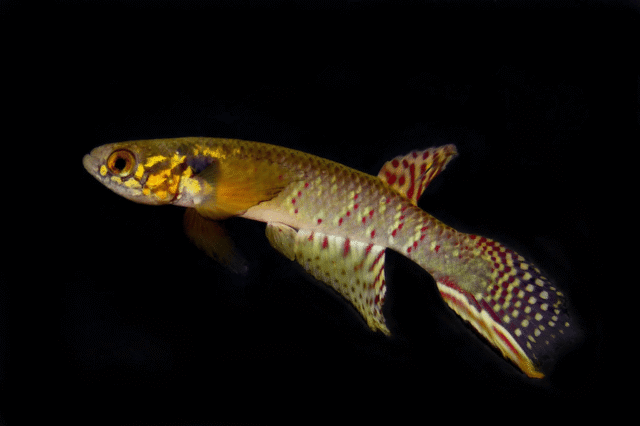
Researchers have confirmed the survival of Moema claudiae, a rare seasonal killifish from Bolivia that had not been seen in the wild for more than two decades. The rediscovery offers renewed hope for the species’ protection and highlights the urgent need to conserve the region’s fragile wetland ecosystems.
Moema claudiae had not been recorded at its original location for over 20 years. That site has since been destroyed and converted into farmland. Despite extensive surveys over the past two decades, no additional individuals were found, leading scientists to classify the species as Critically Endangered under IUCN criteria and consider it possibly extinct.
Surviving Population Found in Forest Fragment
During a recent field expedition, researchers Heinz Arno Drawert and Thomas Otto Litz discovered a small surviving population in a temporary pond within a remnant forest patch, surrounded by intensive agricultural land. This isolated habitat proved to be a vital refuge for the species.
The rediscovery, published in the open-access journal Nature Conservation, marks the first confirmed sighting of Moema claudiae in more than 20 years. Scientists were able to take the first live photographs, observe the fish’s behaviour, and document aspects of its natural history never recorded before.
Remarkably, the rediscovery site also contained six additional species of seasonal killifish, making it the most genetically diverse assemblage of these fish ever recorded worldwide.
Thomas Litz, one of the co-authors, said: “For me, it is something special to have rediscovered Moema claudiae. This has shown that we now have the opportunity to preserve this species in the wild. I am all the more pleased because Prof. Wilson Costa named this species after his wife Claudia, and I would like to take this opportunity to thank him especially for decades of collaboration and support.”
The area lies at the ecological boundary between the Amazon rainforest and the Llanos de Moxos savannas, a transition zone that appears to support exceptional biodiversity. However, rapid deforestation and agricultural expansion are placing these habitats under extreme pressure.
Urgent Call for Habitat Protection
Scientists stress that immediate conservation action is essential. The site is currently the only known location supporting a wild population of Moema claudiae and represents an irreplaceable global biodiversity hotspot.
Over the past 25 years, Bolivia has lost nearly 10 million hectares of forest, including critical wetland habitats. With deforestation accelerating in recent years, researchers warn that many unique species and ecosystems could be lost without urgent intervention.
“Without rapid and effective action to curb the irrational expansion of the agricultural frontier in Bolivia’s lowlands, we risk losing some of the world’s most important terrestrial and aquatic ecosystems, and with them the irreplaceable goods and services they provide,” added co-author Heinz Drawert. “We cannot hope to achieve true social and economic wellbeing unless we also maintain the functionality of the ecosystems that sustain it.”
——————————————————————————
At Natural World Fund, we are passionate about restoring habitats in the UK to halt the decline in our wildlife.