
Scientists Track Trillions of UK Insects Using Radar for the First Time
For the first time, scientists have used Met Office radar data to track the trillions of insects flying over the UK, uncovering a worrying decline in nocturnal insect populations.
The research team repurposed data from the UK’s network of 15 weather surveillance radars, which scan the skies hundreds of times each day.
Between 2014 and 2021, daytime insect numbers remained relatively stable, with some southern regions even showing increases. In contrast, night-time airborne insects, particularly in the far north of the UK, showed a notable decline, according to the analysis.
“This is one of the first studies to show how day- and night-flying insects are being affected differently, and how their habitats influence those patterns,” said Dr Mansi Mungee, who led the work as a postdoctoral researcher at the University of Leeds, and is now based at Azim Premji University in India. “It’s a crucial step toward understanding where to focus conservation efforts.”
From “Angels” on Military Radar to Insect Monitoring
Radar first detected birds, bats, and insects during the Second World War, producing mysterious blips that operators called “angels.”
Over the decades, as radar technology shifted to weather forecasting, Met Office scientists developed algorithms to filter out the “biological scatter” caused by swarming insects and migrating birds.
“They’d been throwing out heaps of biodiversity data,” said Dr Christopher Hassall, an animal biology researcher at the University of Leeds and co-author of the research. “We realised this data could potentially be extracted and that it could be a treasure trove of information rather than an irritation.”
For this study, the team did the opposite—removing rain, clouds, and weather signals to isolate the movement of insects in the air.
“Some of the insects are active flyers, some are just following the thermals,” said Dr Ryan Neely, of the National Centre for Atmospheric Science and the University of Leeds. “It’s an amazing way to visualise what the air is doing. It’s really beautiful.”
Focus on Insect Numbers Rather Than Species Diversity
Unlike citizen science projects that track insect species diversity, this study concentrated on overall insect abundance.
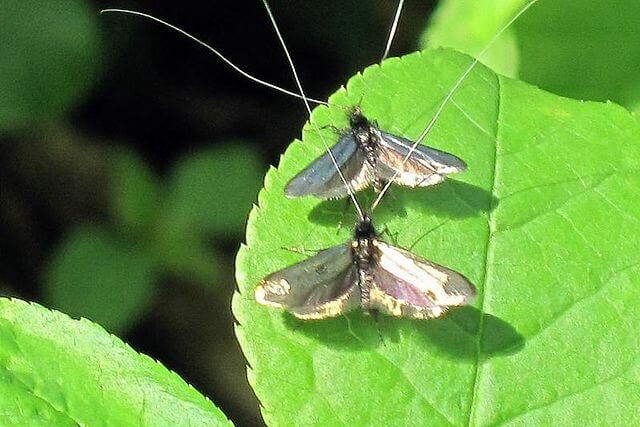
The findings show that nocturnal insects, such as moths, have declined in recent years, with northern regions particularly affected.
Artificial light at night, known to disrupt insect behaviour, may be a contributing factor to these declines, the researchers suggest.
“It could be a blip, but there’s also a shift in the way we are lighting the night, in terms of the types of bulbs and car headlights getting brighter,” said Hassall.
Impact of Climate Change and Urban Environments
The study found that northern species have generally declined, while insect numbers have increased in southern regions, likely linked to the climate crisis.
Interestingly, urban areas showed higher insect numbers than large areas of uniform agricultural land, which typically provide less diverse habitats.
“The northern species will be declining because it’s getting too warm and too dry for them,” said Hassall. “They will be replaced by southern species, but there’s a lag.”
The research highlights the value of repurposing radar data for insect population monitoring and the need for urgent action to address the decline of nocturnal insects.
The findings are published in the journal Global Change Biology.
——————————————————————————
At Natural World Fund, we are passionate about restoring habitats in the UK to halt the decline in our wildlife.