
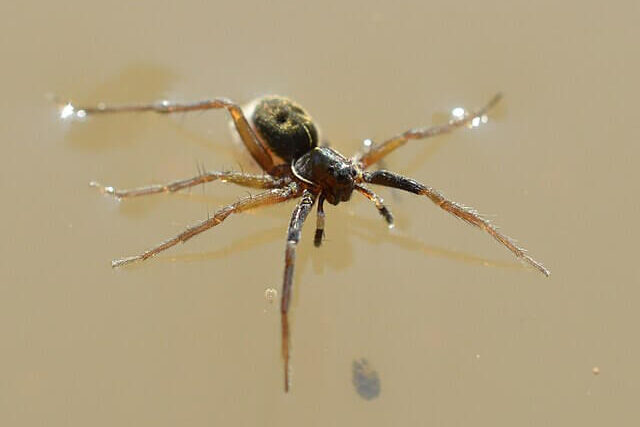
Critically Endangered Spider Rediscovered After Nearly 40 Years
A critically endangered spider not seen in the UK for nearly 40 years has been rediscovered in a remote Isle of Wight nature reserve that can only be reached by boat.
Aulonia albimana, last recorded in Britain in 1985, was found at the National Trust’s Newtown National Nature Reserve – approximately 2km (1.2 miles) from the species’ previously known colony.
The tiny arachnid, recognisable by its bright orange legs, has been informally dubbed the “white-knuckled wolf spider” by the team who made the discovery.
Scientists Celebrate an “Unforgettable” Wildlife Discovery
Entomologist Mark Telfer, who located the species alongside colleague Graeme Lyons, described the moment as “one of those unforgettable discoveries”.
“To find a species thought lost for 40 years is thrilling – and testament to how the right habitat management, combined with curiosity and collaboration, can deliver remarkable results,” he said.
Wolf spiders – around 38 species of which live in the UK – are named for their hunting style, chasing prey along the ground before leaping like a wolf. However, the National Trust said the hunting behaviour of Aulonia albimana remains something of a mystery, as this species is also known to build a delicate web.
A Race Against Time to Find the Species
Mr Lyons said: “I suggested calling it the white-knuckled wolf spider because this was probably the longest long shot I’ve ever taken part in.
“We had just four hours at the site where this spider was last seen 40 years ago, before our boat came to pick us up.
“I found the first one with just nine minutes to go, and the second one in the last minute.
“I’ve seen 559 species of spider in the British Isles and this one was by far the most exciting find.”
The spider’s nickname comes from the distinctive pale “knuckles” on the small appendages beside its mouth, Telfer explained.
A Major “Lost Species” Rediscovery for Britain
Dr Helen Smith, conservation officer for the British Arachnological Society, said: “The remarkable discovery of this dapper little spider on the Isle of Wight is one of Britain’s epic ‘lost species’ rediscoveries of the century.
“With repeated failure to find it at its former sites, where its open habitat has been lost, it seemed increasingly likely that it had joined the country’s sad list of extinct species.”
Habitat Restoration Key to Its Return
The habitat where the spider was rediscovered had once been heavily overgrown, but restoration work by the National Trust – aided by a grazing flock of Hebridean sheep – has transformed it. The sheep maintain short, open turf, creating the patchy, sunlit ground the white-knuckled wolf spider depends on.
Dr Smith praised the “vital habitat restoration work”, saying it has given the rediscovered species “not only a place to survive, but hopefully a place where it can now thrive.”
“We look forward to working with the National Trust to establish the full extent of the population and determine the conditions it needs to expand its range and secure its future” she said.
——————————————————————————
At Natural World Fund, we are passionate about restoring habitats in the UK to halt the decline in our wildlife.